


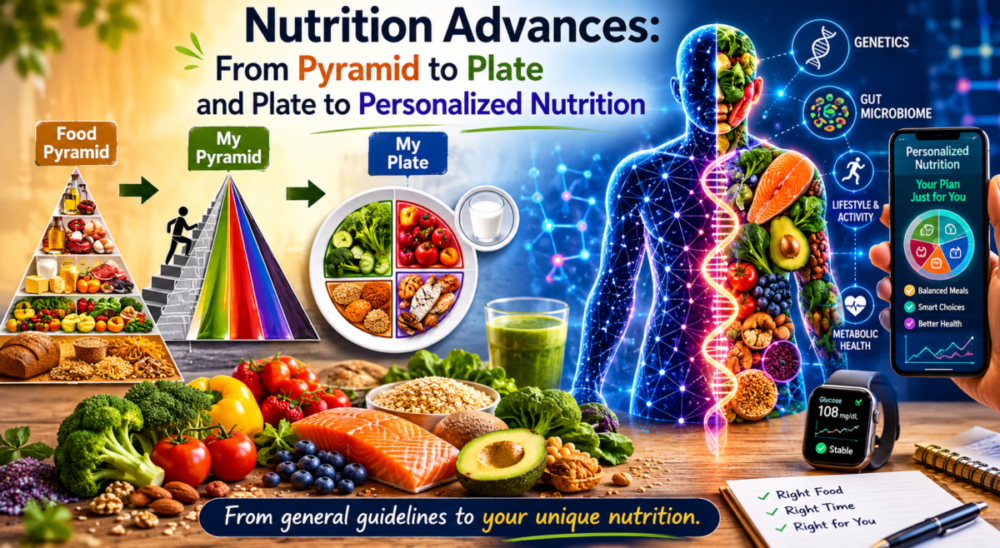
The evolution of dietary guidance over the decades reflects a change in our understanding for food—not just fuel, as a complex interaction between biology, lifestyle, and environment. The timeline from the traditional “Food Pyramid” to “MyPyramid,” then to “MyPlate,” and finally to “Personalized Nutrition” demonstrates how science has gradually moved from generalized recommendations to individualized, evidence-based approaches.
Food Pyramid
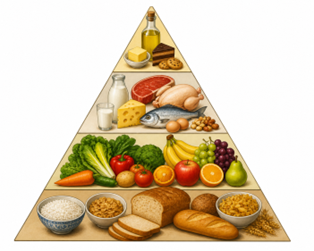
The original Food Pyramid, introduced in the early 1990s, was a simple, visual hierarchical structure, with grains at the base, making up the largest portion of the diet, followed by fruits and vegetables, then proteins and dairy, and finally fats and sweets at the top to be consumed carefully. While this model simplified nutrition education to help the public make healthier food choices, it also had substantial limitations. It treated all foods within a category as equal, for example, refined grains and whole grains were grouped together despite their different metabolic effects. Similarly, all fats including beneficial unsaturated fats were grouped into one, without distinguishing them from saturated. As nutrition science evolved, it became obvious that this oversimplification could lead to unintended health consequences.
My Pyramid
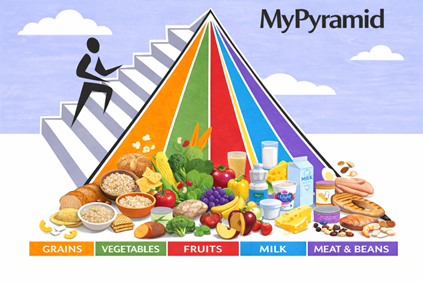
In response to these limitations, MyPyramid was introduced in 2005 in which horizontal layers of the food groups were replaced with vertical color-coded bands and also the idea of physical activity (symbolized by climbing steps on the side of the pyramid) was introduced. The focus of MyPyramid was to adjust dietary advice according to age, sex, and activity level using online tools. However, despite its scientific improvements, MyPyramid was extensively criticized for being confusing and harder for the general public to translate into daily eating habits.
My Plate
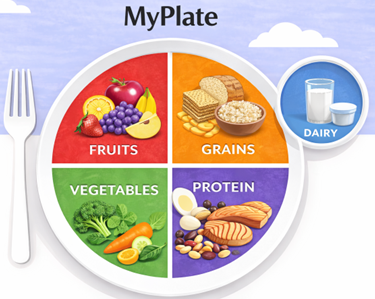
Identifying the need for a clearer and more useful model, My Plate was introduced in 2011. This approach was significantly different and unlike previous models, emphasized portion control and meal composition rather than daily totals. The plate was divided into four sections—fruits, vegetables, grains, and protein with a side portion of dairy to visually guide individuals to balance their meals. Though My Plate improved usability, it provided general guidelines, assuming that this model could apply mostly across diverse populations.
Personalized Nutrition
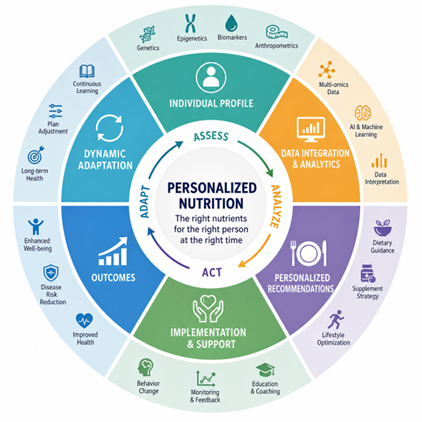
With expansion in nutrition, genetics, and metabolism research, it became evident that these dietary guidelines have limitations. Therefore, an approach that could tailor dietary recommendations to an individual’s unique biological and lifestyle was required. This realization led to the emergence of personalized nutrition, a model that also considers factors such as genetic predisposition, gut microbiome composition, metabolic health, age, activity level, and even circadian clocks. This has shifted the focus from merely meeting nutrient requirements to optimizing physiological function and preventing chronic diseases. For example, two people eat the same bowl of rice, one person’s blood sugar may rise sharply, while of other may remain stable. Some people are genetically more sensitive to caffeine and may experience anxiety or poor sleep after coffee, while others can tolerate it well. Due to different gut microbiome one person may digest fiber-rich foods easily while another may experience bloating.
Evidence Based Studies
The personalized approach is especially helpful in managing diabetes. Instead of following a low-sugar diet, people are recommended diet based on how their own body responds. For example, a diabetic person may learn which specific carbs (like lentils vs. sugary drinks) are better tolerated by their body, instead of avoiding all carbohydrates. Which makes the diet more sustainable in the long term.
In a study based on 800-person cohort, glycemic responses were measured to predict personalized nutrition of the participants. Glucose levels were continuously monitored for a week in response to 46,898 meals. Glucose levels were found to be highly variable in response to identical meals which suggest that general dietary recommendations have limited use. A machine-learning algorithm that could integrate blood parameters, dietary habits, physical activity and gut microbiota was used to predict personalized postprandial glycemic response to meals. An interventional study based on this algorithm resulted in significantly lower glucose responses and alterations to gut microbiota. In addition, effect of a personalized dietary program versus general advice (control) on cardiometabolic health was studied using a randomized clinical trial. The personalized diet led to some improvements in cardiometabolic health compared to standard dietary advice.
Challenges for Personalized Nutrition
Though personalized nutrition is future, it also has many challenges, the major is accessibility and cost of tools such as continuous glucose monitors, mobile health apps, wearable devices, and AI systems which allow real-time tracking of data like blood sugar levels, physical activity, and food intake which can then be used to create customized diet plans. Another challenge is over complication of the data that may cause individuals to overlook fundamental factors such as dietary balance, food quality, and consistency. Some people may also find it difficult to track food intake or may feel overwhelmed wearing devices.
Conclusion
In conclusion, there is no single perfect diet for everyone, and the best approach is one that is tailored to the individual. However, for this approach to become widely used, challenges such as cost, accessibility and scientific validation need to be addressed.
For Further Readings
- Personalized Nutrition in the Era of Digital Health: A New Frontier for Managing Diabetes and Obesity
- Effects of a personalized nutrition program on cardiometabolic health: a randomized controlled trial
- Personalized Nutrition by Prediction of Glycemic Responses
- Personalized nutrition: the end of the one-diet-fits-all era
- Personalized Nutrition: Tailoring Dietary Recommendations through Genetic Insights